 BEAT-MEMORY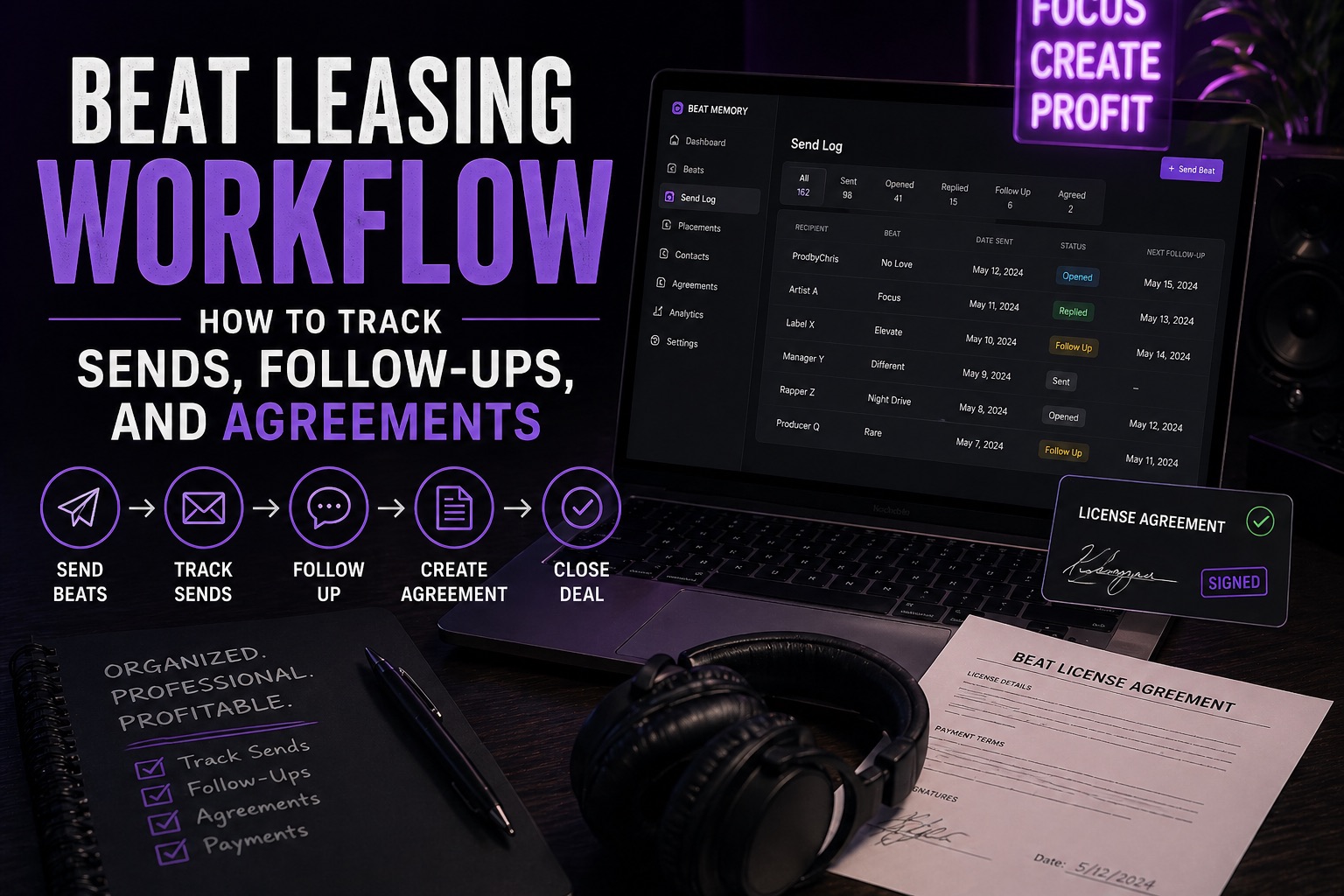
A producer can have great beats and still lose deals because the workflow around those beats is weak. Someone gets sent a pack, replies weeks later, and now you are searching inboxes, old exports, and folders just to remember what happened. That drag adds up.
What usually breaks
Most leasing workflows break in the same places. Sends are not tracked clearly. Follow-ups happen late or not at all. Agreements are generated manually. Split details sit somewhere else. Nobody has one clean view of the relationship attached to the beat itself.
A smarter leasing workflow
- Track every send tied to the specific beat
- Attach artist follow-up history to the same record
- Generate lease agreements from one place
- Store split and co-producer details with the deal
- Log what happened after the lease so nothing gets lost
Why follow-up history matters
Relationship memory matters just as much as file management. If an artist says they are interested but needs time, that is not a dead lead. It is a real opportunity that needs context. The better your follow-up memory is, the more likely you are to close later without sounding disconnected.
Professional beats need professional process
Leasing should not feel like rebuilding the whole transaction every time. Once the workflow is structured, you move faster, look more professional, and reduce the number of details that fall through the cracks.
Beat-Memory is built to help producers connect sends, follow-up history, and agreement generation inside one system instead of forcing them across multiple tools.
Start Beat-Memory